
Kalshi’s 2026 NFL MVP market has traded about $9 million across 45 contracts, compared with roughly $400,000 on Polymarket’s equivalent market, according to OddsShopper’s August 2026 exchange comparison. Josh Allen leads Kalshi’s board at 11 cents, with Lamar Jackson, Justin Herbert, and Joe Burrow clustered at 10 cents.
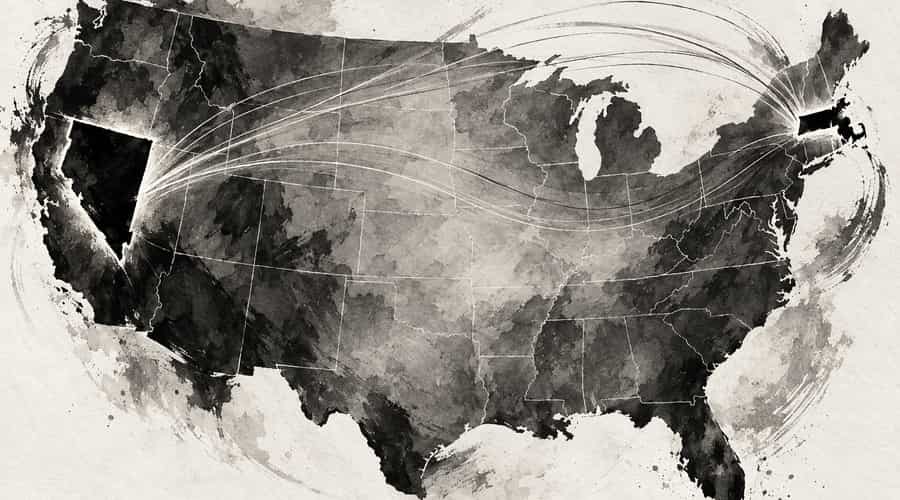
The gap is not just a pricing detail. It shows how quickly football contracts have become a central liquidity test for regulated U.S. event markets, even as Kalshi’s sports business faces a more contested legal map after recent state and federal court rulings in Nevada and Washington.
What are the current NFL MVP prices on Kalshi?
OddsShopper’s August 18 snapshot put Allen, the Buffalo Bills quarterback, at the top of Kalshi’s AP Pro Football MVP market at 11 cents. Jackson, Herbert, and Burrow followed at 10 cents each, leaving the early market without a clear runaway favorite before the regular season begins.
The top of Kalshi’s board, as compiled by OddsShopper, was:
- Josh Allen, Buffalo Bills: 11 cents
- Lamar Jackson, Baltimore Ravens: 10 cents
- Justin Herbert, Los Angeles Chargers: 10 cents
- Joe Burrow, Cincinnati Bengals: 10 cents
- Caleb Williams, Chicago Bears: 7 cents
- Drake Maye, New England Patriots: 7 cents
- Matthew Stafford, Los Angeles Rams: 7 cents
- Patrick Mahomes, Kansas City Chiefs: 7 cents
- Dak Prescott, Dallas Cowboys: 6 cents
- Jordan Love, Green Bay Packers: 5 cents
All ten names in that group are quarterbacks, a familiar feature of modern MVP markets. Pro-Football-Reference’s 2025 AP MVP voting table also shows the award staying at quarterback, with Stafford winning the 2025 AP MVP after a 17-game season for the Rams.
Why is Allen ahead of Stafford and Jackson?
Allen’s early lead reflects his recent MVP profile rather than a large price break from the field. He won the 2024 AP MVP award, and NFL.com lists his 2024 rushing line at 102 carries for 531 yards and 12 touchdowns. His rushing production gives voters and traders another path to value beyond passing totals.
Stafford enters the 2026 season as the reigning AP MVP. Pro-Football-Reference’s 2025 awards table credits him with 24 first-place votes and 366 voting points, narrowly ahead of Drake Maye’s 361 voting points. That context makes Stafford’s 7-cent Kalshi price notable, but it does not by itself show a mispricing. MVP markets tend to price team expectations, age, durability, and narrative alongside the previous season’s award result.
Jackson remains near the top of the market because his 2024 peak was still one of the strongest recent quarterback seasons. NFL.com lists his 2024 line at 4,172 passing yards, 41 passing touchdowns, 4 interceptions, 915 rushing yards, and 4 rushing touchdowns. His 2025 season was shorter, with NFL.com listing 13 games, 2,549 passing yards, 21 passing touchdowns, and 349 rushing yards.
Burrow and Herbert round out the 10-cent group, giving Kalshi four quarterbacks separated by only one cent at the top. That is a tighter opening structure than a market led by a single favorite in the high teens or 20s, and it leaves Week 1 performance with room to reset the board quickly.
How does Kalshi compare with Polymarket on the same market?
OddsShopper’s comparison found Kalshi with about $9 million in cumulative MVP volume, roughly 22 times Polymarket’s $400,000 on the corresponding event. The same analysis listed Kalshi’s market at 45 contracts and identified 27 names appearing on both platforms.
Prices were not uniform across the two exchanges. OddsShopper listed Allen at 11 cents on Kalshi and 14 cents on Polymarket, while Burrow was 10 cents on Kalshi and 9 cents on Polymarket. Stafford was 7 cents on Kalshi and 6 cents on Polymarket. Jordan Love was 5 cents on Kalshi and 4.2 cents on Polymarket.
Those differences matter for market structure coverage, but they should not be read as a recommendation about where to trade. They show that two prediction-market venues can carry materially different order books on the same sports outcome, especially before the first regular-season games supply new information.
What does the legal picture look like for Kalshi sports contracts?
Kalshi is a CFTC-designated contract market, but recent rulings have kept sports-event contracts in a live state-law fight rather than settling the issue in Kalshi’s favor nationwide. The most important recent decision came from the U.S. Court of Appeals for the Ninth Circuit on August 28, 2026, in KalshiEX LLC v. Assad, No. 25-7516.
The Ninth Circuit affirmed in part a Nevada ruling that dissolved a preliminary injunction Kalshi had won earlier in the case. The panel held that Kalshi had not shown a likelihood that the Commodity Exchange Act preempts Nevada gaming regulation as applied to its sports-event contracts. The court also remanded part of the case for further proceedings on Nevada’s challenge to election contracts.
That decision cuts against the broad claim that federal commodities regulation alone prevents state gaming regulators from acting against sports-event contracts. It does not end the national dispute. It does, however, make Nevada a major reference point for other states arguing that sports contracts on prediction exchanges can fall within state gambling law.
Washington has moved separately. On August 13, 2026, the Washington Attorney General’s Office said a King County Superior Court judge had ordered Kalshi to stop offering, accepting, or facilitating wagers in Washington on several categories, including sports, elections, politics, entertainment, culture, tech and science, and mentions. The office said the order required IP-address and residency-based geofencing by August 19 and a multi-source geofencing system by September 2.
Kalshi’s sports availability is therefore better described as jurisdiction-specific and contested, not nationally settled. Promotional and availability notices in late August listed several excluded jurisdictions, including Arizona, Illinois, Massachusetts, Maryland, Michigan, Montana, Nevada, Ohio, and Washington.
Why does the NFL MVP market matter beyond one award?
The MVP market is a useful read on three industry questions at once: whether sports-event contracts can keep drawing liquidity, whether U.S. exchanges can compete with offshore prediction markets on major sports outcomes, and how quickly state litigation can change the operating map.
The football calendar gives that test a predictable first checkpoint. The Buffalo Bills open their 2026 regular season at the Houston Texans on Sunday, September 13, according to the NFL schedule and the Bills’ published team schedule. The Texans’ schedule lists the same Week 1 matchup at Reliant Stadium.
For Kalshi and Polymarket, the first NFL Sunday will test whether the pre-season order books deepen or fragment once actual game performance begins shaping the MVP race. For regulators and courts, the next milestone is already dated: Washington’s order called for Kalshi’s multi-source geofencing system by September 2, less than two weeks before Bills-Texans opens the regular-season data cycle for Allen’s MVP contract.