Meta description: A Kalshi Heisman bet on Tennessee freshman Faizon Brandon highlights sports-contract growth and a live Supreme Court fight.
Tags: Kalshi, CFTC, Heisman Trophy, Faizon Brandon, Tennessee, New Jersey, Nevada
Market platform: Kalshi
Category: Regulation
A $1,000 Kalshi position on Tennessee true freshman quarterback Faizon Brandon to win the 2026 Heisman Trophy has become a clean example of how far college football has moved onto federally regulated event exchanges. The ticket, publicized by Kalshi Sports and reported by Rocky Top Insider, sits inside a legal fight now split between federal appeals courts.
What did the Kalshi trader buy on Faizon Brandon?
The position is a binary Heisman contract: it pays $1 if Brandon wins the 2026 Heisman Trophy and $0 if he does not. Rocky Top Insider reported Sept. 2, citing a Kalshi Sports post, that one Kalshi user had placed $1,000 on Brandon at a 1% market price, creating a potential gross payout of $100,000 if the Tennessee quarterback wins the award.
The math matters because event-contract prices are not sportsbook odds. At 1 cent, $1,000 buys about 100,000 contracts before fees, and those contracts would settle for $100,000 if the outcome resolves Yes. At 2 cents, the same $1,000 controls about 50,000 contracts, for a gross payout of about $50,000. The headline payout depends on the price paid, not just the player named on the ticket.
Kalshi has an obvious commercial interest in publicizing long-shot sports trades, especially as its sports business faces state challenges. But the Brandon ticket is still useful as a market signal: college football awards, player depth charts and freshman quarterback speculation are now being converted into tradable contracts on a CFTC-registered exchange.
Why is Brandon priced like a long shot?
Brandon is a true freshman, and no true freshman has won the Heisman Trophy. Johnny Manziel and Jameis Winston won as redshirt freshmen in 2012 and 2013, respectively, but both had been in their programs before their winning seasons. Brandon is beginning his first college season as Tennessee’s starter.
Tennessee coach Josh Heupel named Brandon the Volunteers’ starting quarterback for the Sept. 5 opener against Furman, according to the University of Tennessee athletics department. The school said Brandon would be Tennessee’s first true freshman starting quarterback in a season opener since Brent Schaeffer started against UNLV on Sept. 5, 2004.
The supporting cast gives traders something to debate without changing the basic long-shot profile. Tennessee returns receiver Braylon Staley, receiver Mike Matthews and running back DeSean Bishop, who rushed for 1,076 yards and 16 touchdowns in 2025, according to Tennessee’s official player bio and Sports Reference. That is relevant to a Heisman market because quarterback award cases often track team success, offensive output and national visibility as much as raw talent.
How large is Kalshi’s Heisman market?
Kalshi’s Heisman board is structured as separate yes-or-no contracts for listed players. In an Aug. 24 market snapshot, Stokastic listed 31 names on the board and said about 7.7 million contracts had traded across the listings since the market opened. The same snapshot put Notre Dame quarterback CJ Carr at 11.5 cents, Texas quarterback Arch Manning at 9.5 cents and Miami quarterback Darian Mensah at 7.5 cents.
Those prices should be read as market-implied probabilities, not as bookmaker odds. A 10-cent contract costs about 10 cents and pays $1 if the named player wins. A trader can also sell or exit a position before settlement if there is a market on the other side. Kalshi collects trading fees and operates a central-limit order book, while licensed sportsbooks quote odds and write wagers under state gaming rules.
The Heisman contract timeline is also fixed. Stokastic’s snapshot cited the Heisman calendar, with finalists scheduled for Dec. 7 and the trophy presentation scheduled for Dec. 12. The listed Kalshi contract expiration is Jan. 1, 2027. For traders, that means the market can reprice through the season but ultimately turns on a single award result.
Is Kalshi allowed to offer college football contracts?
The legal answer now depends heavily on geography and appellate posture. Kalshi argues that sports event contracts traded on its CFTC-registered designated contract market are swaps governed by the Commodity Exchange Act, giving the CFTC exclusive jurisdiction. Several states argue the contracts are sports wagers that still fall under state gaming law, especially when they track game outcomes, player performance or college sports.
New Jersey lost a major round in April. In KalshiEX LLC v. Flaherty, No. 25-1922, decided April 6, 2026, the U.S. Court of Appeals for the Third Circuit affirmed a preliminary injunction blocking New Jersey officials from enforcing state gambling laws against Kalshi’s sports-related event contracts. The majority held that Kalshi had shown a reasonable likelihood of success on its argument that the Commodity Exchange Act preempts state enforcement against those contracts on a CFTC-licensed market.
Nevada won the opposite result in August. In KalshiEX LLC v. Assad, No. 25-7516, decided Aug. 28, 2026, the U.S. Court of Appeals for the Ninth Circuit affirmed in part a district court order dissolving an injunction against Nevada. The Ninth Circuit held that Kalshi’s sports event contracts were not likely protected from Nevada gaming enforcement by the Commodity Exchange Act and rejected Kalshi’s preemption arguments at the preliminary-injunction stage.
Massachusetts adds a state-court track. The Massachusetts attorney general announced Jan. 20 that a Suffolk County Superior Court judge had granted a preliminary injunction against Kalshi’s sports offerings in the state. But that posture later changed: Law360 reported that the Massachusetts Appeals Court stayed the injunction on Feb. 17 while Kalshi pursued an expedited appeal.
Tennessee is also in active litigation. Tennessee Attorney General Jonathan Skrmetti said May 26 that the state had asked the Sixth Circuit to reverse a lower-court ruling that blocked Tennessee from enforcing its sports-wagering laws against Kalshi. The federal docket in KalshiEX LLC v. Orgel, No. 3:26-cv-00034, shows U.S. District Judge Aleta Trauger granted Kalshi a preliminary injunction against Tennessee officials on Feb. 19 and required a $500,000 bond.
Why does one Heisman ticket matter to the broader market?
The Brandon ticket matters less because of its chance of winning than because of the regulatory category it occupies. A Tennessee freshman’s starting status, Tennessee’s offensive personnel and the Heisman voting calendar are being priced as financial contracts, while state regulators and federal courts disagree over whether that structure removes the products from gambling law.
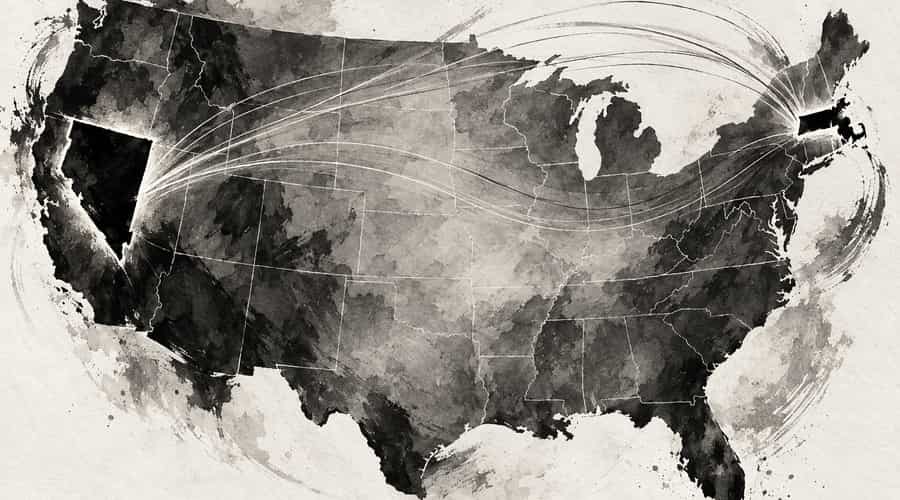
That disagreement is no longer hypothetical. The Third Circuit has sided with Kalshi’s preemption theory against New Jersey, while the Ninth Circuit has allowed Nevada’s sports-gaming laws to apply at this stage. New Jersey has already asked the U.S. Supreme Court to review the issue, according to Barron’s, putting the central question before the justices: whether sports event contracts on CFTC-regulated exchanges can be treated as federally governed derivatives, or whether states can regulate them as sports betting.
For the prediction-markets industry, the stakes are structural. A ruling for Kalshi would strengthen the exchange model for sports contracts and weaken state-by-state gaming barriers. A ruling for state regulators would force exchanges to confront licensing, geofencing and product limits closer to the sportsbook regime they have tried to distinguish themselves from.
The next milestones are concrete. Brandon’s first Tennessee start is scheduled for Sept. 5 against Furman. The Heisman finalists are scheduled to be announced Dec. 7, with the ceremony set for Dec. 12. The legal calendar is less tidy, but the Supreme Court petition now gives the sports-contract fight a national track beyond the separate proceedings in New Jersey, Nevada, Massachusetts and Tennessee.