
Kalshi is using sports publisher referral codes to recruit new users before the NFL regular season, including Rocky Top Insider’s ROCKY code, which advertises up to $500 in variable bonus credit after $25 in qualifying trades. The campaign sits inside a larger shift toward sports event contracts, a category now drawing state lawsuits, league scrutiny and a proposed CFTC rule.
What does the ROCKY referral code offer?
Rocky Top Insider’s August 16 post says the ROCKY referral code is active into September and offers new Kalshi users a variable bonus credit of up to $500 after $25 in qualifying trades on Kalshi’s Predictions product. The posted terms describe a range of $15 to $500, a seven-day window to complete the qualifying trading requirement, and a seven-day period to use the bonus credit once granted.
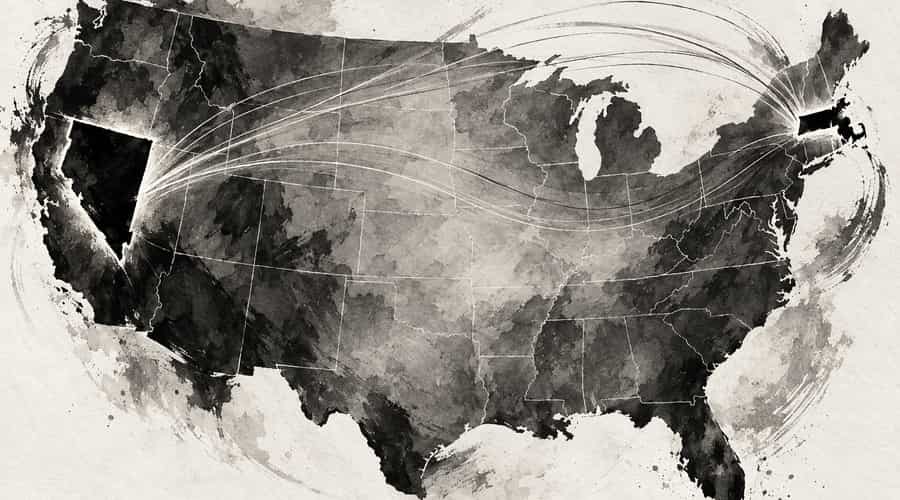
The offer is framed for Rocky Top Insider’s Tennessee and Vol Nation audience, but the terms posted with the article list eligibility by residence and state exclusions rather than limiting the promotion to Tennessee. The same terms say the offer is for new Kalshi accounts only, available to users 18 or older with a legal U.S. residential address in an eligible jurisdiction. The listed exclusions were Arizona, Illinois, Massachusetts, Maryland, Michigan, Montana, New Jersey and Ohio.
Kalshi’s own referral program FAQ says referral reward amounts vary by program and can change between referrals. It also says users must sign up through a referral link or enter a valid referral code, complete identity verification and meet the trading requirement shown in the app or Rewards section. That matters because the $500 figure is a maximum, not a guaranteed credit.
Why is Kalshi using sports publishers before Week 1?
The referral push is a customer acquisition strategy aimed at sports audiences already reading team, odds and roster coverage before the NFL season. Rocky Top Insider’s post references the Tennessee Titans, Atlanta Braves and Arch Manning’s Heisman market, using local sports interest as the entry point into Kalshi’s broader event-contract exchange.
The timing is not incidental. The Titans-Seahawks game on August 23 was each team’s second preseason game, not the start of either club’s preseason. Tennessee opened its preseason at San Francisco on August 13, and Seattle opened against Dallas on August 15. By the August 23 game, Kalshi and its media partners were already promoting football-related markets ahead of the September regular-season window.
Sports have become central to Kalshi’s trading mix. Sports Business Journal reported in June that CFTC Chair Michael Selig described sports as more than 80 percent of event-contract volume on regulated exchanges. The National Law Review, citing a December 17, 2025 Foresight Ventures report, said Kalshi’s annualized trading volume rose from about $300 million to $40 billion to $50 billion since August 2025, with year-end trading driven primarily by sporting event contracts.
How did Kalshi’s NFL markets become a federal issue?
Kalshi lists sports contracts as a CFTC-registered Designated Contract Market, using the federal self-certification process available under the Commodity Exchange Act. That is different from an affirmative agency approval of each market. Under the CFTC framework described in court filings and agency materials, a registered exchange may self-certify a contract, and the contract can become effective if the agency does not halt or review it within the applicable period.
Kalshi began listing sports-related event contracts on January 24, 2025, according to a court filing excerpted in a 2026 industry membership book. The same filing says the CFTC declined to review or prohibit those sports contracts, allowing them to become effective under the federal process. NFL Week 1 markets were posted on May 29, 2025, giving Kalshi a regular-season football product before its first full NFL campaign.
That structure is now at the center of the industry’s legal fight. State officials argue that sports prediction contracts look like gambling and should be subject to state gaming law. Kalshi and the CFTC’s current leadership argue that event contracts listed on a federally regulated exchange fall under federal commodities law, not a state-by-state sportsbook licensing regime.
What do Kalshi sports contracts look like compared with sportsbook bets?
Kalshi’s basic sports contracts trade between 1 cent and 99 cents and resolve at $1 if the event happens. A contract priced at 55 cents implies a market probability near 55 percent before fees and potential spread costs. Traders can sell positions before resolution, which makes the product behave more like an exchange-traded contract than a fixed sportsbook ticket.
The sportsbook comparison is still difficult for regulators to avoid. Football markets such as game winners, spreads, totals, player performances, season outcomes and futures overlap heavily with the categories that state-licensed sportsbooks offer. Kalshi’s legal distinction is the market structure: users trade against other users on an order book, while the exchange earns fees rather than taking the other side as a bookmaker.
That distinction has not ended the debate. The American Gaming Association and several state regulators have argued that prediction-market sports contracts bypass gaming taxes, responsible-gaming rules and licensing standards. Prediction-market operators respond that CFTC oversight supplies a federal regulatory regime and that exchange trading is different from house-banked wagering.
What is the CFTC proposing for sports event contracts?
The CFTC published a proposed rule, “Prediction Markets; Public Interest Determinations,” in the Federal Register on June 12, 2026, with comments due July 27, 2026. The proposal would amend Part 40 rules for event contracts and define how the agency determines whether a contract is contrary to the public interest under the Commodity Exchange Act’s special rule.
The proposal treats sports as “gaming” for purposes of the special rule but does not propose a broad ban on sports markets. Instead, it lays out a framework under which the Commission could review self-certified event contracts and place them into a 90-day review period. If the Commission does not issue an order finding the contract contrary to the public interest by the end of that review, the contract may continue to trade.
For sports, the June proposal draws the sharpest lines around categories tied to manipulation and integrity risk. Front Office Sports reported that the 267-page notice would restrict markets involving officiating decisions, injuries, fights and certain in-game discrete-action props. Sports Business Journal reported that NFL senior vice president Brendon Plack filed a July comment asking the CFTC for tighter restrictions, including a stronger process for leagues to object to contracts before they are listed.
Where does the New York case fit?
New York has become one of the most visible state challenges to Kalshi’s model. Law360 reported on August 11, 2026, that the CFTC issued an emergency order directing Kalshi to continue operating even if New York obtained a restraining order in its enforcement action. CoinTelegraph reported on August 12 that the CFTC treated New York’s action and request for emergency relief as a market emergency.
New York Attorney General Letitia James and state gaming officials argue that Kalshi’s event contracts violate state gambling law. The CFTC’s intervention escalated the preemption fight by asserting that a state court order restricting Kalshi’s federally regulated exchange activity could interfere with markets overseen under the Commodity Exchange Act.
The practical stakes are larger than New York. MarketWatch reported in August that state actions against prediction-market operators are multiplying, with states including New York, Arizona and Minnesota challenging whether federally registered exchanges can offer sports and other event contracts inside their borders. A patchwork of state rulings would complicate the national model that makes publisher referral campaigns valuable in the first place.
What is the next milestone?
The immediate regulatory milestone is the CFTC’s handling of comments on its June 12 proposed rule, followed by any final rule or revised process for event-contract reviews. For Kalshi, the commercial test comes sooner: whether publisher-driven signups before NFL Week 1 convert into sustained football trading while state lawsuits and league objections continue to press the limits of the federal model.
Meta description: Kalshi’s ROCKY referral code offers up to $500 as NFL sports contracts face CFTC rulemaking, state lawsuits and league scrutiny.
Tags: Kalshi, CFTC, NFL, New York Attorney General, Rocky Top Insider, Sports Prediction Markets
market_platform: Kalshi
category: Regulation