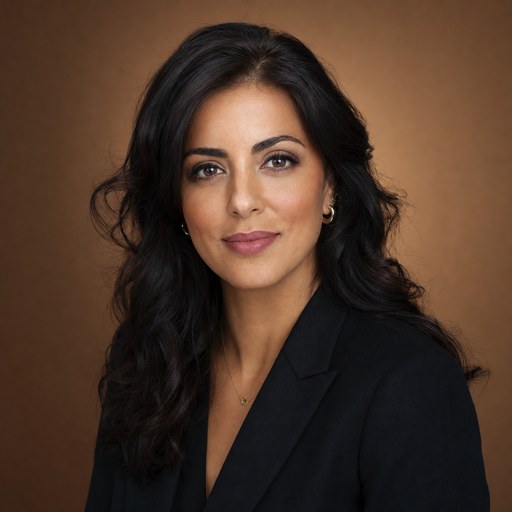

Meta description: Kalshi permanently banned George Santos and fined him $71,356 after CFTC penalties over State of the Union event-contract trading.
Tags: Kalshi, George Santos, CFTC, State of the Union, Prediction Markets
Market platform: Kalshi
Category: Regulation
Kalshi permanently banned former Rep. George Santos on August 31, 2026, and imposed a $71,356 platform penalty after determining he likely traded on inside knowledge of whether he would attend President Donald Trump’s State of the Union address. The Commodity Futures Trading Commission had already settled related manipulative-trading charges on July 31, ordering Santos to disgorge $17,569.98, pay a $17,500 civil monetary penalty and accept a three-year trading ban.
What did George Santos trade on Kalshi?
Santos traded a Kalshi event contract titled “Who will attend the State of the Union?” between February 12 and February 25, 2026, according to the CFTC’s July 31, 2026 order and release. The relevant question was whether Santos himself would attend the 2026 State of the Union address. That made the contract unusually direct: the trader was also the person whose conduct could determine the outcome.
The CFTC said Santos bought and sold positions while making social media statements about whether he would attend the address. The agency found that those posts included material misrepresentations and omissions, and that contract prices moved in a direction favorable to Santos after the posts. The CFTC ordered disgorgement of $17,569.98 in profits and a separate $17,500 civil monetary penalty, for a total monetary obligation of $35,069.98 under the federal order.
Kalshi’s own disciplinary action used a higher profit figure for its platform case. The Associated Press reported that Kalshi said Santos made $17,839 from the trades, and CBS News reported that the exchange imposed a $71,356 penalty in its disciplinary filing. The difference matters because the CFTC order and Kalshi’s internal penalty are separate actions, with different remedies and enforcement authority.
Why did Kalshi issue a lifetime ban?
Kalshi said it found reasonable cause to believe Santos engaged in prohibited trading tied to his attendance at the State of the Union, according to CBS News and ABC News accounts of the exchange’s disciplinary filing. CBS reported that a Kalshi spokesperson attributed the lifetime ban to Santos’s lack of cooperation with the company’s compliance department. The ban is the first permanent prohibition Kalshi has imposed on a user, according to those reports.
Kalshi’s rules bar users from trading on contracts whose outcomes they can materially influence. In this case, the core conflict was not remote or theoretical. Santos was trading on a question about his own attendance at a specific presidential address, while also speaking publicly about whether he would be there.
ABC News reported that Kalshi found Santos made statements with the intent to manipulate the price of Yes and No contracts he intended to purchase, and that those statements did move prices. After the August 31 action, Santos responded on X: “Hey @Kalshi thanks for the lifetime ban from your gambling platform. Let’s see how much longer you guys are around for.”
The lifetime ban also shows how exchange-level discipline can go beyond federal settlement terms. The CFTC order imposed a three-year trading ban and monetary sanctions under federal commodities law. Kalshi’s August 31 action added a permanent platform ban and a separate $71,356 penalty under the exchange’s rules.
What did the CFTC order require?
The CFTC’s July 31 order settled charges that Santos engaged in manipulative activity in an event contract whose underlying event he controlled. The order required three things: disgorgement of $17,569.98, a $17,500 civil monetary penalty and a three-year trading ban. Santos also agreed to cease and desist from further violations of the Commodity Exchange Act and CFTC regulations.
The agency’s framing was narrow and important for the prediction-market industry. It did not describe the case as ordinary political betting or as a general dispute over election markets. It described the conduct as manipulation of an event contract where the trader controlled the underlying event and used public statements while holding positions.
That distinction is central to the regulatory risk facing event-contract exchanges. Prediction markets often rely on public information, political analysis and fast-moving news. The Santos order addressed a different problem: a participant trading on a contract tied directly to his own conduct while making statements that the regulator said affected prices.
Who else did Kalshi penalize?
Kalshi also announced three-year suspensions for other political figures who traded on markets tied to their own candidacies, according to ABC News, the Associated Press and Roll Call. Those cases involved Laurie Buckhout, a Republican congressional candidate in North Carolina; Stephen Cloobeck, who briefly ran for governor of California; and Ben Midgley, who ran for the Republican nomination for governor of Maine.
ABC News reported that all three purchased event contracts related to their own races and that Kalshi said each qualified as a decision maker for the relevant contract because each had direct influence over the underlying event. The platform said all three cooperated with its investigation, according to ABC News.
The penalties differed by case. ABC News reported that Cloobeck purchased about $10,000 worth of contracts tied to his own candidacy, received a three-year suspension and was assessed a $31,770 financial penalty. The Associated Press reported that Buckhout admitted placing less than $1,000 in bets on her campaign and received a $2,589 fine and a three-year ban. AP also reported that Midgley bet less than $1,000 on his campaign and received a three-year suspension.
The named candidate cases are significant because they show Kalshi applying its own-interest trading rules beyond Santos. They also show why the Santos sanction stood apart: the other political figures received temporary bans, while Santos received the platform’s first lifetime ban.
Why does this matter for prediction-market regulation?
The Santos case gives regulators and exchanges a concrete example of a market-integrity problem that is specific to event contracts: a participant can sometimes know or control facts that other traders are trying to forecast. In financial markets, insider trading rules focus on material nonpublic information. In event markets, the issue can be more direct when the contract depends on a person’s own decision.
For Kalshi, the disciplinary action comes as the exchange and the broader industry face scrutiny over how prediction markets police manipulation, conflicts of interest and privileged information. The company’s enforcement decisions are also part of its posture before regulators, state officials and courts that are deciding how far federally regulated event-contract markets can expand.
The CFTC’s July 31 order provides the federal baseline in the Santos matter. Kalshi’s August 31 disciplinary action shows how a registered exchange can add its own penalties when it concludes a user violated platform rules. The gap between a three-year federal trading ban and a lifetime platform ban is now part of the compliance precedent other prediction-market operators will be measured against.
What is the concrete next marker?
The fixed consequence now on the record is the CFTC’s three-year trading ban imposed in its July 31, 2026 order, alongside $35,069.98 in disgorgement and civil penalty obligations. Kalshi’s August 31 action adds a permanent platform ban and a $71,356 exchange penalty. For the prediction-market industry, the practical benchmark is already set: platforms that list contracts tied to public figures’ own actions now have a high-profile enforcement record to cite when writing, applying and defending conflict-of-interest rules.